DRS Turns Data into Decisions
Wireless Connectivity × Data Logging × End-to-End Traceability
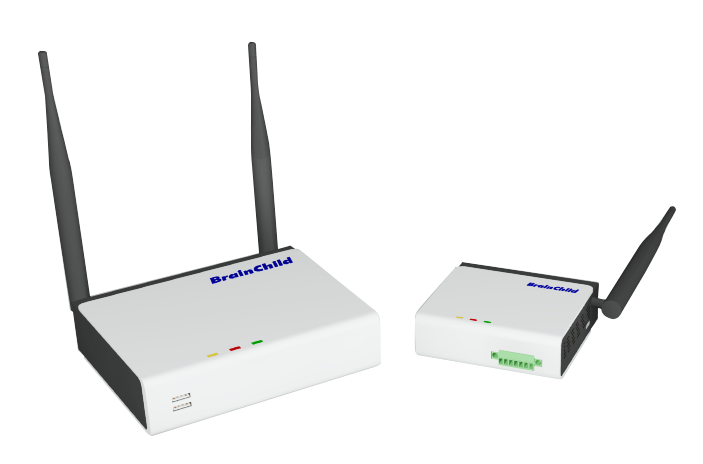
As smart manufacturing, industrial automation, and ESG-driven digital transformation continue to accelerate, manufacturers are facing challenges beyond simply collecting operational data. The real challenge today is how to continuously capture, access, and utilize critical information efficiently across increasingly complex industrial environments.
In 2026, BrainChild officially introduces the new DRS (Distributed Recording System), designed around three core concepts — wireless connectivity, distributed deployment, and centralized management.
Built to overcome the limitations of conventional recording architectures constrained by wiring complexity, channel expansion challenges, and fragmented facility operations, DRS enables manufacturers to establish a more flexible, reliable, and efficient approach to industrial data acquisition and operational visibility.
More than just a wireless recording device, DRS is an intelligent platform that integrates sensing, wireless transmission, centralized recording, alarm notification, and system integration capabilities — making industrial monitoring faster, more complete, and significantly easier to integrate into existing infrastructure.
Monitoring Requirements Are Growing
Traditional Architectures Are Reaching Their Limits
As quality standards become increasingly stringent, traceability expectations expand, and digital transformation accelerates, monitoring strategies are shifting from isolated measurement points toward continuous, long-term, and traceable operational visibility.
Organizations today manage an expanding range of information, from temperature and humidity conditions to equipment performance, process parameters, and storage environments. Beyond real-time monitoring, companies increasingly require reliable record retention, deployment flexibility, and scalable infrastructure capable of supporting future operational growth.
Conventional monitoring solutions typically rely on centralized wiring architectures that increase installation complexity and limit future expansion. Adding new monitoring points often requires significant infrastructure modification, resulting in higher deployment, expansion, and maintenance costs.
DRS adopts a distributed architecture centered around MeshGate gateways and SensNode edge devices. Monitoring nodes can be flexibly positioned close to measurement locations, significantly reducing wiring requirements while improving scalability.
Each SensNode includes two analog input channels supporting thermocouples (TC), RTD sensors, voltage signals, current signals (mA), and linear-output sensors. The platform is suitable for applications including biotechnology manufacturing, healthcare environments, nutraceutical production, cold chain storage, and laboratory monitoring, helping organizations build a more adaptable and resilient monitoring infrastructure.
Wireless Connectivity
Expand Monitoring Without Infrastructure Constraints
DRS utilizes Sub-1 GHz Mesh wireless communication technology, delivering extended transmission range, superior signal penetration, and industrial-grade communication reliability. The system automatically establishes a Mesh network and dynamically selects optimal transmission paths to improve operational continuity.
In open environments, MeshGate and SensNode devices achieve validated point-to-point communication distances of up to 900 meters. If communication between a node and the gateway becomes unstable, DRS automatically reroutes transmissions through neighboring nodes to maintain uninterrupted information flow.
SensNode also includes onboard buffering and automatic retransmission capabilities. During temporary communication interruptions, records are securely stored locally and automatically synchronized once connectivity resumes, helping preserve data continuity and traceability.
For applications requiring long-term retention and compliance-ready traceability, missing records or communication disruptions can impact process evaluation and operational performance. DRS combines resilient Mesh networking with automatic recovery mechanisms to maintain information integrity even in demanding environments.
From Monitoring to Management
DRS Connects Critical Information for Greater Operational Efficiency
MeshGate features an integrated web server, eliminating the need for additional software installation. Users can access real-time monitoring, parameter configuration, historical records, and reporting functions directly through a standard web browser.
DRS also supports OPC UA communication, email alarm notifications, user access control, and automatic network time synchronization. The platform seamlessly integrates with SCADA, MES, cloud environments, and existing information systems to streamline information flow across operations.
In addition, the DRS Deployer App simplifies SensNode and MeshGate pairing procedures. Operators can also access device status via Bluetooth during abnormal events, improving inspection efficiency and maintenance responsiveness.
From Management to Traceability
DRS Builds Long-Term Recording Into Smart Operations
As ESG initiatives, quality management expectations, and traceability requirements continue to grow, organizations increasingly require long-term recording mechanisms rather than isolated monitoring functions.
In addition to dual analog input channels, SensNode includes integrated temperature and humidity sensing capabilities suitable for biotechnology production, laboratory environments, cold chain operations, and long-term environmental monitoring.
When environmental conditions exceed configured thresholds, alerts can be automatically delivered through MeshGate, enabling timely response and risk mitigation.
Built-in environmental sensing can also function as dedicated recording channels for environmental monitoring, cold chain management, and long-term trend analysis, supporting stronger operational visibility and long-term record retention.
For organizations pursuing ESG initiatives and digital transformation goals, DRS provides more than monitoring functionality — it delivers an intelligent infrastructure designed for continuous observation, event notification, and information integration.
Intuitive Design
Integrate Critical Information to Drive Smarter Decisions
As ESG initiatives, quality management expectations, and traceability requirements continue to grow, organizations increasingly require long-term recording mechanisms rather than isolated monitoring functions.
In addition to dual analog input channels, SensNode includes integrated temperature and humidity sensing capabilities suitable for biotechnology production, laboratory environments, cold chain operations, and long-term environmental monitoring.
When environmental conditions exceed configured thresholds, alerts can be automatically delivered through MeshGate, enabling timely response and risk mitigation.
Built-in environmental sensing can also function as dedicated recording channels for environmental monitoring, cold chain management, and long-term trend analysis, supporting stronger operational visibility and long-term record retention.
For organizations pursuing ESG initiatives and digital transformation goals, DRS provides more than monitoring functionality — it delivers an intelligent infrastructure designed for continuous observation, event notification, and information integration.
BrainChild DRS helps organizations build a scalable digital foundation that transforms data into actionable decisions.
Discover how DRS can simplify monitoring, improve traceability, and support smarter operations.