In wastewater treatment processes, the changing levels between upstream tanks, treatment tanks, and downstream tanks often reveal whether the overall system is flowing properly, rather than simply showing how full one tank is. The FAE presentation clearly points out that monitoring a single level usually tells you only the current filling status, but does not truly reflect system health. By contrast, differential level provides a much clearer indication of whether the process is operating as intended.
Why Is a Single Level Reading Not Enough in Wastewater Treatment?
1
A Single Reading Does Not Show System Health
A single level reading only shows the current level of one tank. It does not reveal whether the overall treatment process is synchronized or whether blockage or abnormal flow is developing.
2
The Relationship Between Two Points Matters More
In a real process, system performance depends less on one isolated level and more on whether a reasonable difference is maintained between upstream and downstream points.
3
Process Problems Often Start with Imbalance
For example, water may continue entering the system while downstream treatment cannot keep up, or a pump may be running without actually moving water effectively. These conditions are much easier to identify through differential level monitoring.
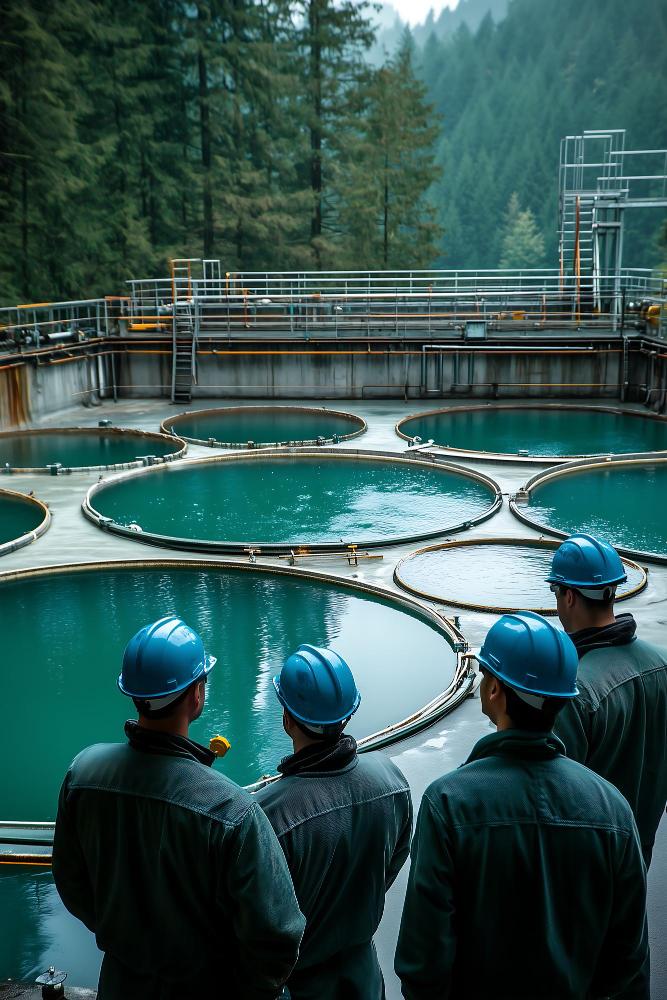
Common Challenges in Wastewater Treatment Systems
Limited Single-Tank Visibility
When only one tank level is monitored, it is difficult to tell whether the condition is normal inflow, delayed discharge, or a process abnormality.
Pump Issues Are Hard to Detect
A pump may be running, but actual flow can still fail because of dry running, pipe blockage, or valve problems, and a single level signal often cannot reveal that quickly.
Hidden System Imbalance
When the upstream level remains high while the downstream level stays low, it often indicates that water is not moving normally and the treatment chain may already be broken.
Alarm Logic Is Too Basic
With only one alarm condition, it becomes difficult to distinguish between a minor deviation, an ongoing abnormality, and a situation approaching overflow or shutdown risk.
IA10 Solution for Wastewater Treatment Applications
To meet the needs of wastewater treatment systems for differential level analysis, multi-level alarms, signal retransmission, and system integration, the IA10 Multifunctional Indicator and Alarm Signal Conditioner provides a more actionable way to monitor the process. From dual-input calculation to multi-level alarm logic, and from signal output to communication integration, the IA10 helps transform separate level readings into information that supports clearer operational decisions.
Dual-Input
Calculation
Accepts two input signals simultaneously and supports real-time calculations such as differential level..
Analog
Retransmission
Provides up to three analog retransmission outputs for easier integration with other systems.
Differential Level Monitoring
Converts upstream and downstream level signals into a differential value, making system imbalance easier to identify.
Communication Integration
Supports RS-485 Modbus RTU for integration with PLCs, SCADA, and supervisory platforms.
Multi-Level Alarm Management
Supports up to five alarm outputs for graded abnormal-condition notification and system response.
Event Input
Control Functions
Supports six event inputs for alarm reset, value hold, and output switching functions.
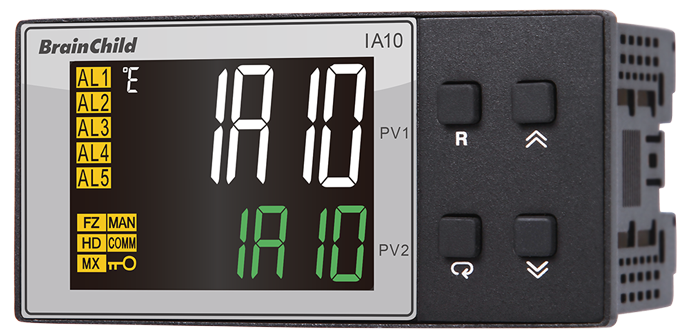
If you are looking for a wastewater treatment solution that combines dual-channel level monitoring, differential level analysis, multi-level alarms, and system integration, the IA10 Multifunctional Indicator and Alarm Signal Conditioner offers a more flexible and more insightful application architecture.
Contact us today to learn which IA10 solution best fits your site requirements.